Seven ways businesses can manage AI risks

GenAI is becoming an essential tool of modern business operations. In the second of a two-part blog, we look at what kind of practical measures businesses should implement to mitigate emerging risks
For businesses, Generative Artificial Intelligence (GenAI) is both exciting and daunting. Users of GenAI are expected to reach 77.8 million in the two years following the November 2022 release of ChatGPT – which is more than double the rate of uptake for mobile phones at the height of their user adoption.[1]
Undoubtedly, GenAI can give a competitive edge, by speeding up operations for instance. But this fast-evolving technology poses new risks to data privacy, intellectual property or sound decision making. While businesses are increasingly looking to engage with the new opportunities that AI offers, many are simultaneously grappling to understand and manage the full risk landscape that it operates within.
2023 research from Riskonnect revealed that although 93% of surveyed companies were aware of AI-related dangers, only 17% have briefed their workforce or implemented any training – and only 9% said that their organization was prepared for these risks.[2]
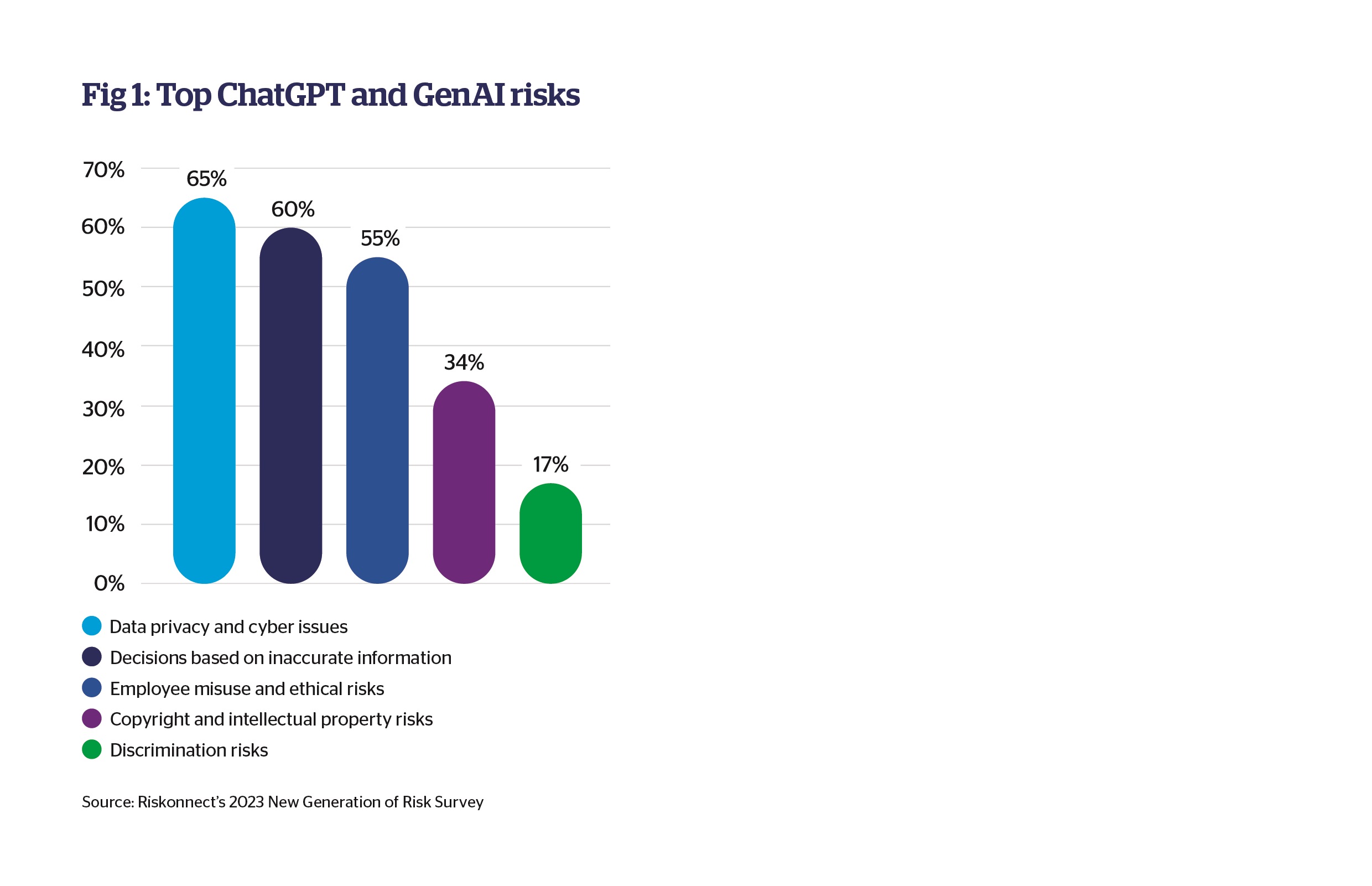
While uncertainty around AI might lead to some to try a ‘wait and see’ approach, risk managers should examine how GenAI applications are being applied to internal and external business operations in more detail. Short- and long-term planning should combine a robust risk management framework alongside structured scenario testing to address potential dangers.
[1] https://www.emarketer.com/content/generative-ai-adoption-climbed-faster-than-smartphones-tablets
[2] https://riskonnect.com/content-library/new-generation-risk-report/?portfolioCats=90